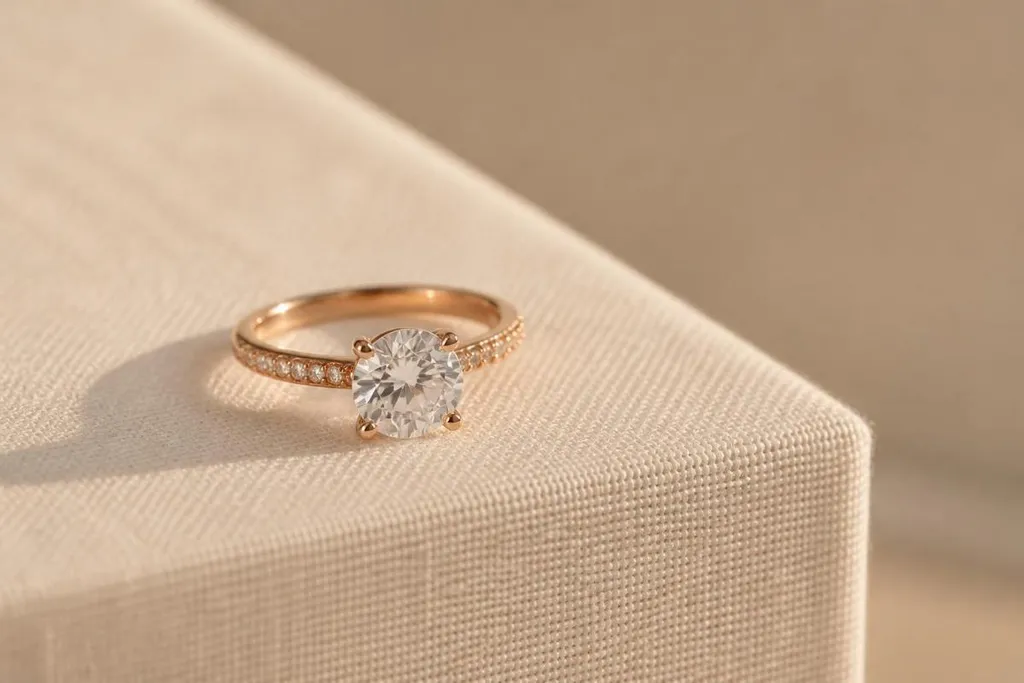
Rose gold has a warmth that immediately distinguishes it from other precious metals. Less traditional in appearance than yellow gold and softer in tone than white metals, it brings a subtle blush of colour to an engagement ring without overwhelming the centre stone. That balance has helped it move beyond trend status to become an established choice in contemporary fine jewellery.
For buyers considering hallmarked rose gold engagement rings, there is also more to understand than colour alone. Rose gold is an alloy whose composition creates its characteristic tone, while UK hallmarking provides independent confirmation of precious-metal fineness. Combined with thoughtful setting and stone choices, these qualities give rose gold a distinctive place among engagement ring metals.
What Gives Rose Gold Its Colour?
Pure gold is naturally yellow. Rose gold achieves its pinkish tone by combining gold with other metals, most notably copper. The precise alloy influences whether the finished metal appears delicately pink, warm rose or somewhat richer in colour.
For engagement jewellery, this alloying process serves a practical purpose as well as an aesthetic one. Pure 24-carat gold is too soft for many forms of everyday jewellery, so additional metals help create an alloy more suited to rings designed for regular wear.
Eighteen-carat rose gold, for example, contains 75% pure gold, with the remaining portion consisting of other alloying metals. This gives it a high precious-metal content while retaining the warm colour that defines rose gold.
Unlike white gold, rose gold does not rely on rhodium plating to create its characteristic appearance. Its colour runs through the alloy itself, so there is no white surface coating that needs periodic replating simply to maintain the intended tone.
Understanding a Rose Gold Hallmark
For qualifying precious-metal jewellery sold in the UK, hallmarking provides an independent means of confirming metal fineness.
An 18-carat gold engagement ring will typically carry a 750 fineness mark, indicating 750 parts of pure gold per thousand. A full UK hallmark can also include the sponsor's mark and the identifying mark of the assay office that tested the item.
This distinction is useful because colour cannot reliably tell a buyer the purity of a gold alloy. Two rose gold rings might appear similar while containing different proportions of gold.
Hallmarking therefore provides reassurance based on independent testing rather than visual appearance or description alone. On an engagement ring intended to be worn for many years, those tiny marks carry considerable significance.
How Rose Gold Changes the Character of a Ring
Metal colour can alter the entire mood of an engagement ring. Rose gold creates gentle contrast with a colourless diamond or lab-grown diamond, framing the stone with warmth rather than visually blending into it.
That contrast works particularly well with softer shapes. Oval, pear and cushion-cut diamonds can take on an especially romantic character against a rose gold band. Round brilliant stones retain their classic appeal but feel less conventional than they might in platinum or white gold. Geometric shapes provide an interesting alternative. An emerald, Asscher or radiant-cut centre stone can look striking against rose gold because the warm metal softens the diamond's architectural lines.
Setting style matters too. A simple rose gold solitaire allows the colour of the band to become part of the design, while pavé shoulders introduce bright points of contrast. Hidden halos can add detail without disturbing the clean face-up silhouette.
Caring for Rose Gold Every Day
Rose gold is suitable for regular wear, but like any precious metal, it can scratch and develop surface marks over time. The underside of an engagement ring usually shows these changes first because it comes into frequent contact with desks, handles and other surfaces. Gentle cleaning helps remove lotions, soap and everyday residue from the band and setting. Heavy manual tasks are better undertaken without the ring, reducing unnecessary knocks and abrasion.
Professional inspections are also worthwhile. A jeweller can check claws and stone security while assessing whether polishing would refresh the finish.
The wedding ring deserves consideration as well. Matching rose gold can create a cohesive bridal set, while combining metals offers deliberate contrast for someone who prefers a mixed-metal look.
Final Thought
Rose gold engagement rings have romantic character, but their appeal goes beyond sentiment. The colour comes from the metal's alloy rather than a temporary surface finish, while hallmarking provides independent confirmation of its precious-metal fineness. Its warm tone can soften geometric diamonds, complement curved shapes and give even a restrained solitaire a distinctive personality. For someone seeking an engagement ring that feels refined yet less conventional than classic yellow or white metals, hallmarked rose gold offers a balance of warmth, practicality and enduring character.